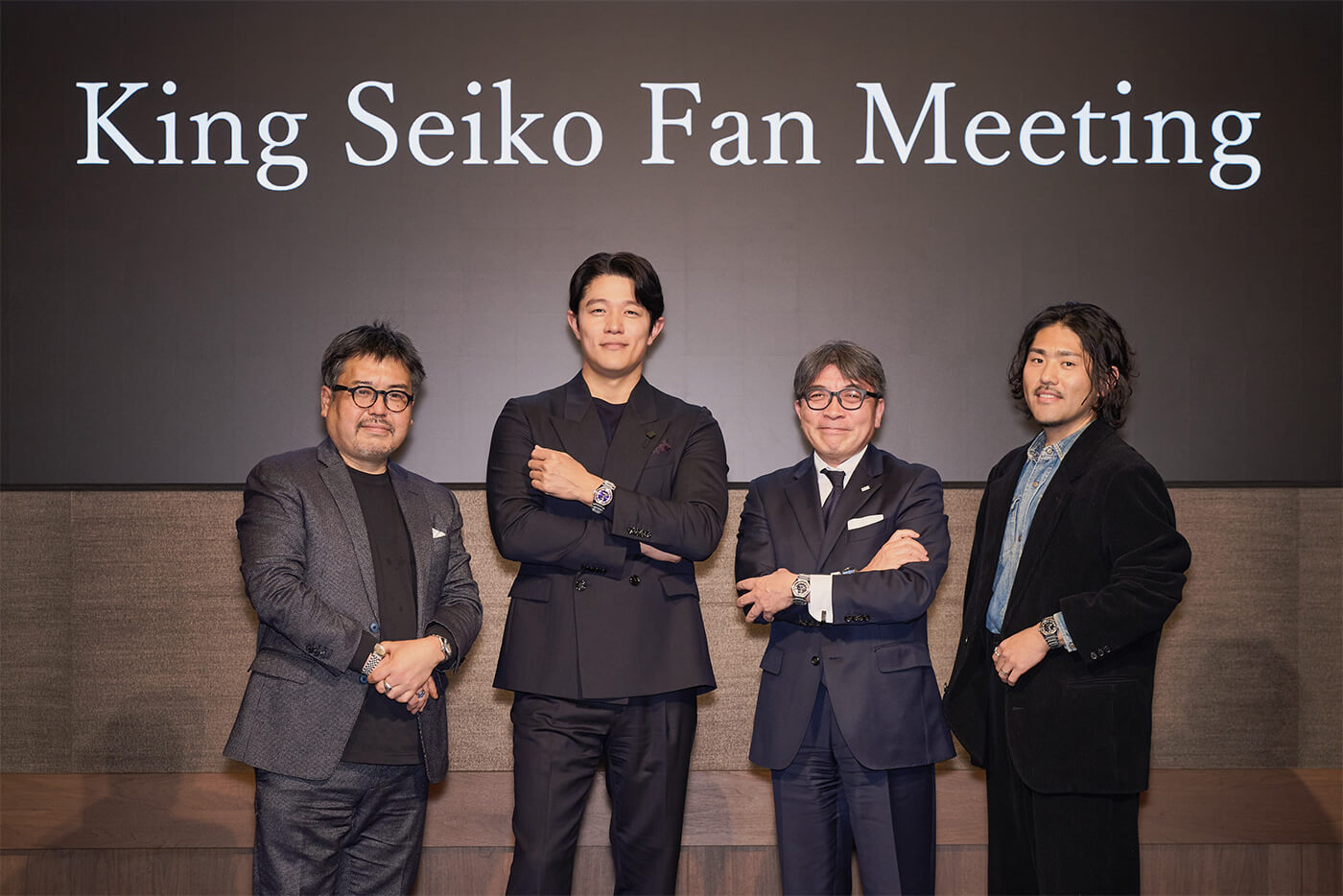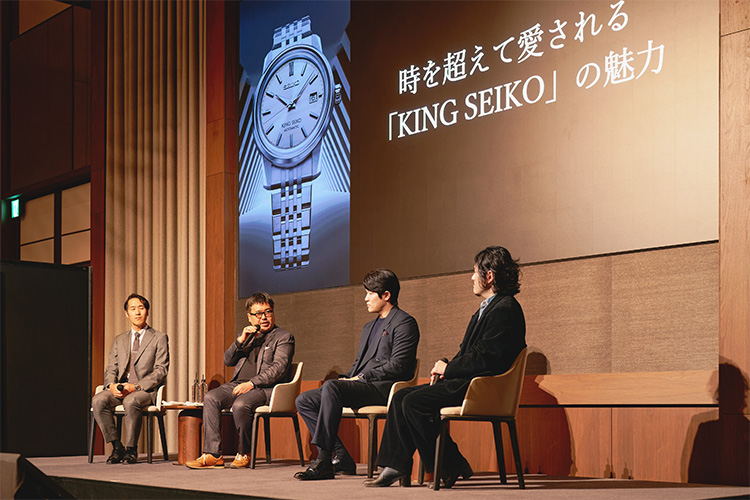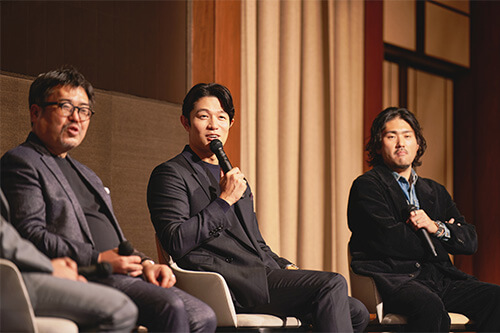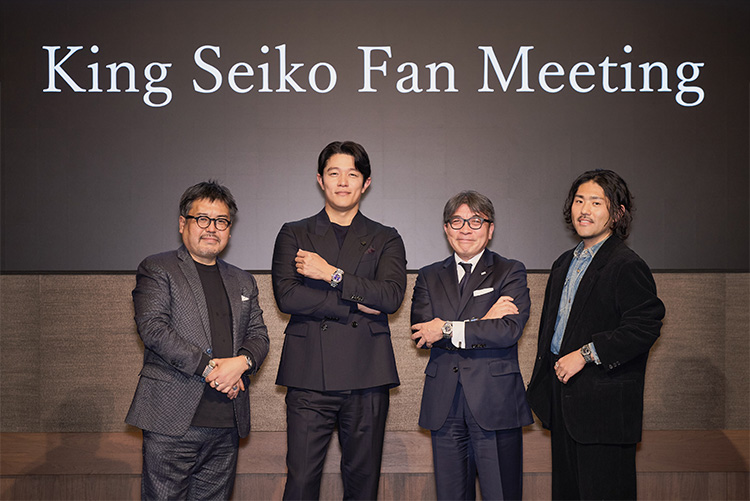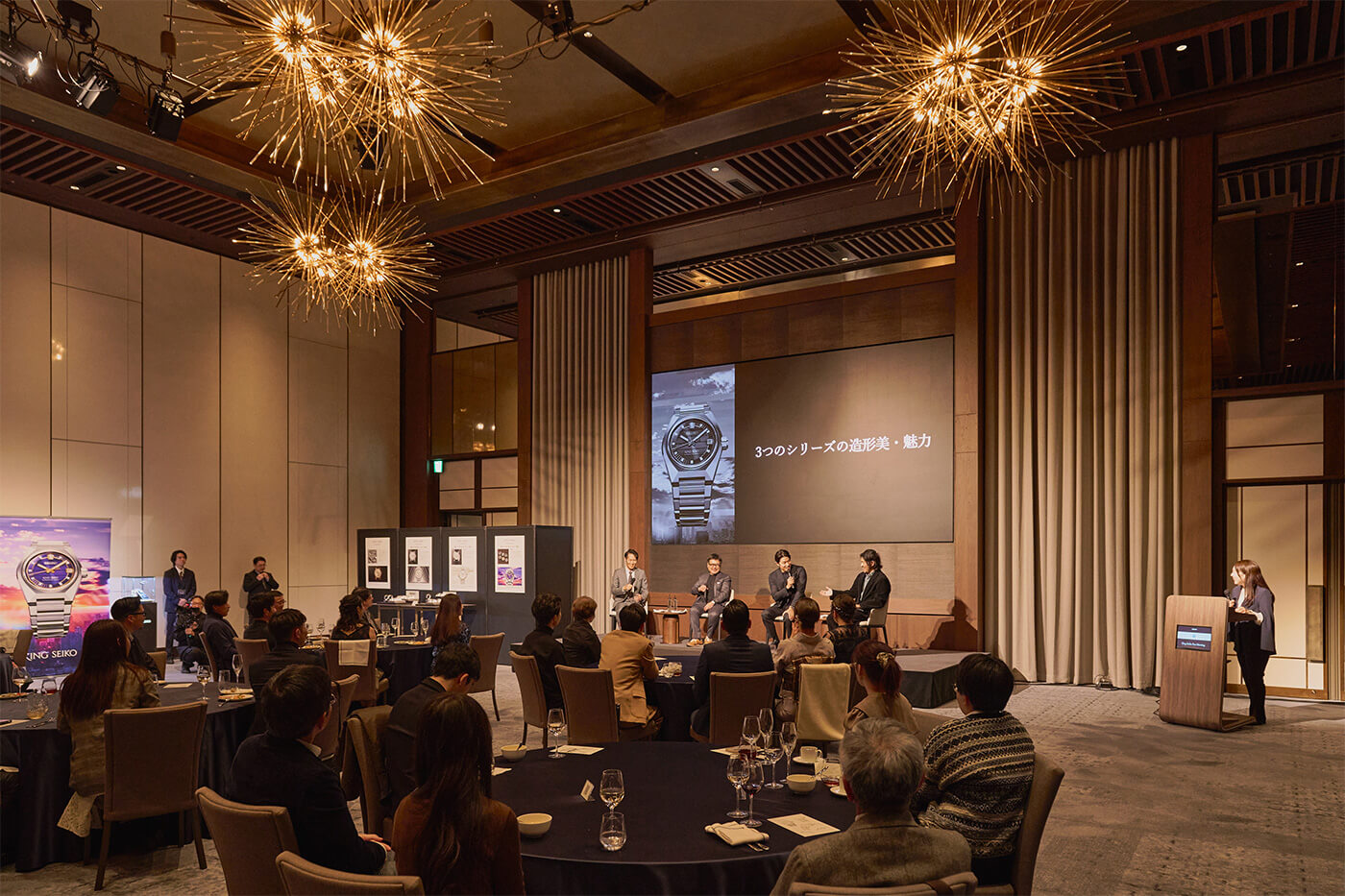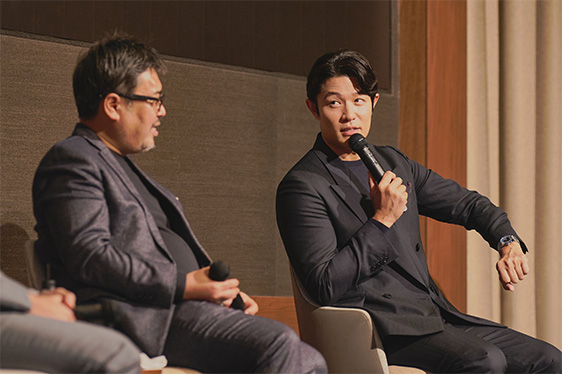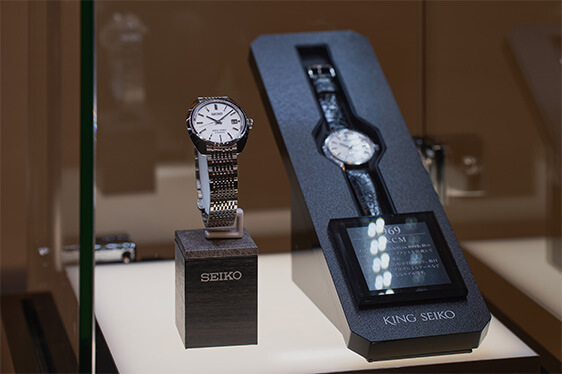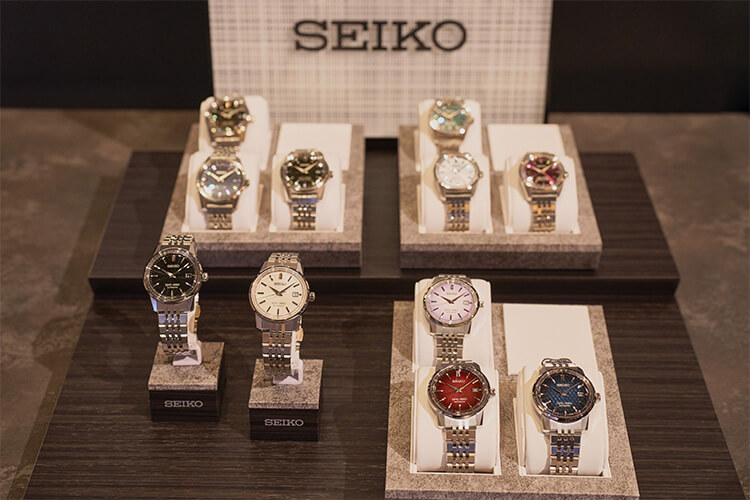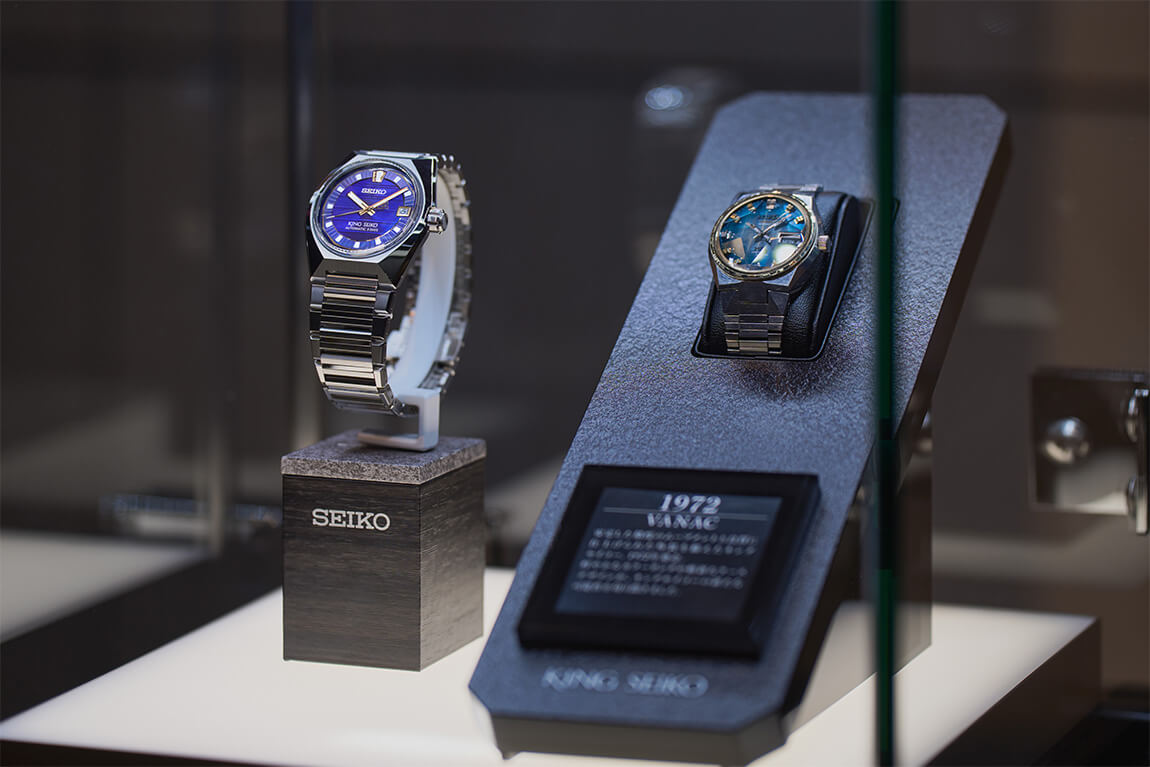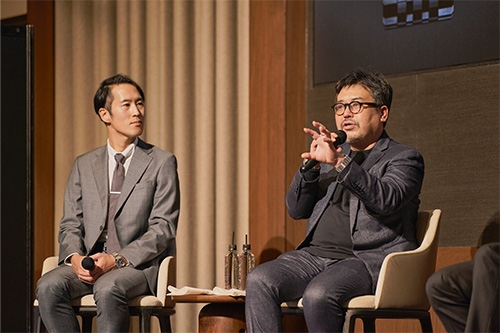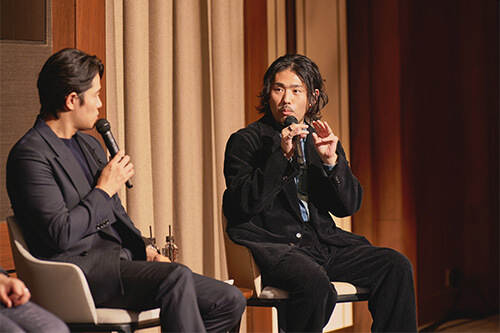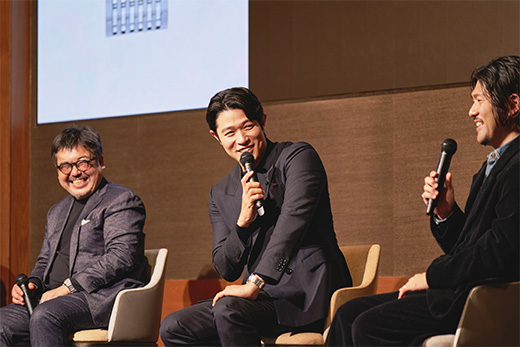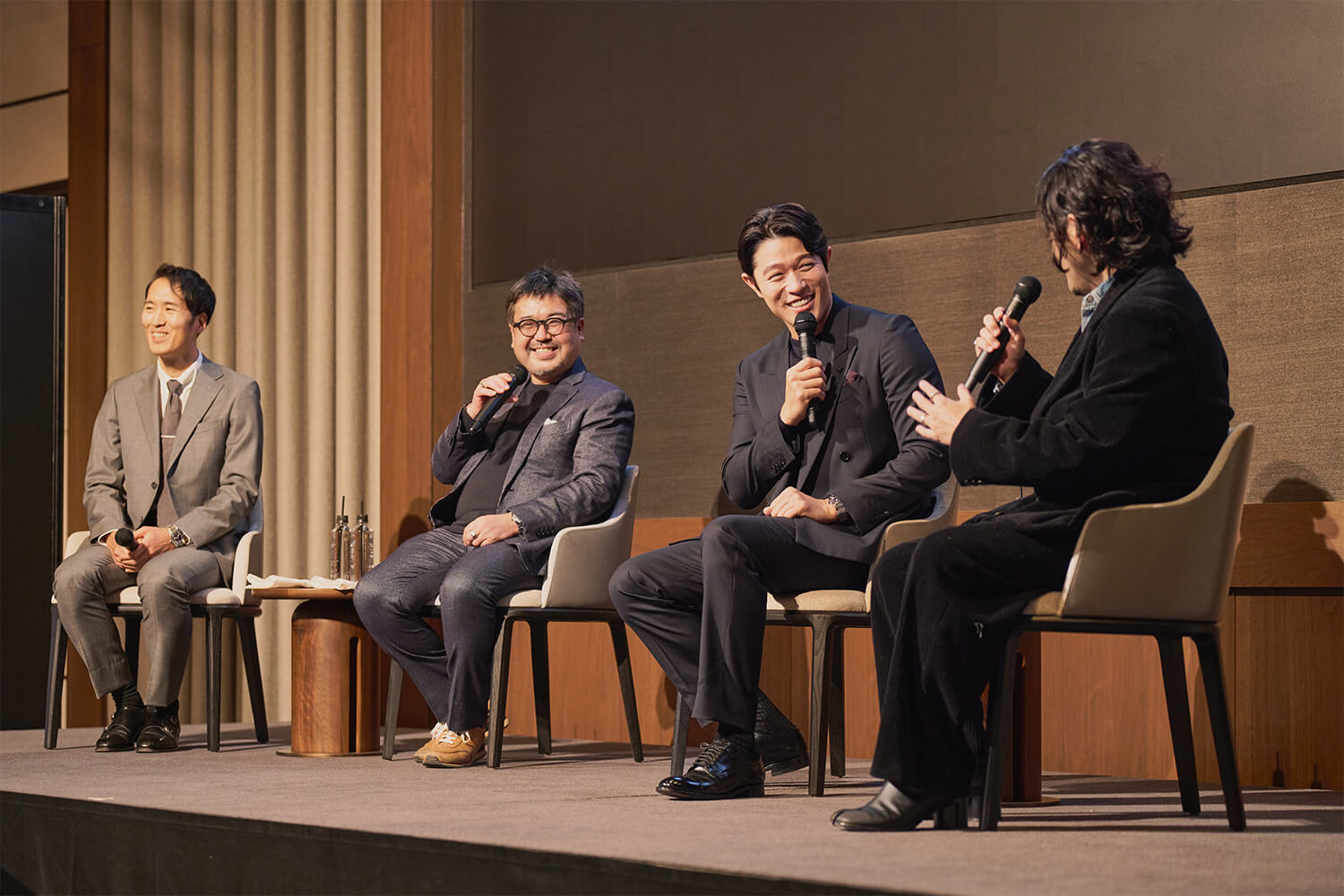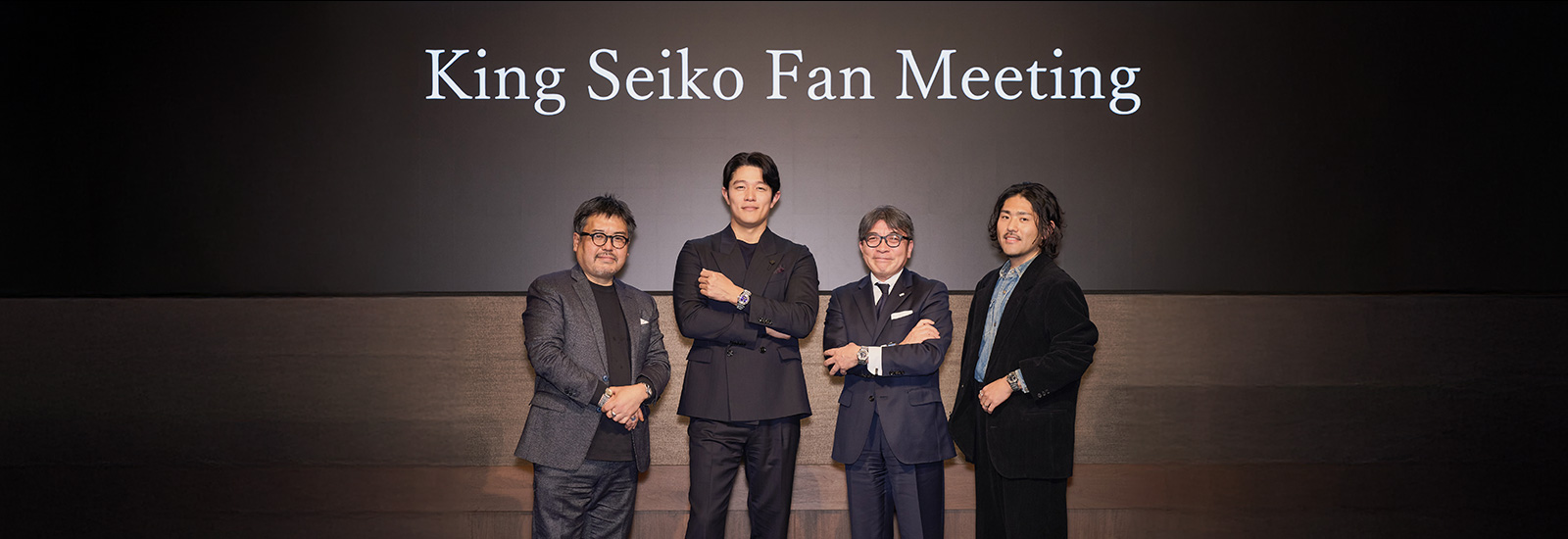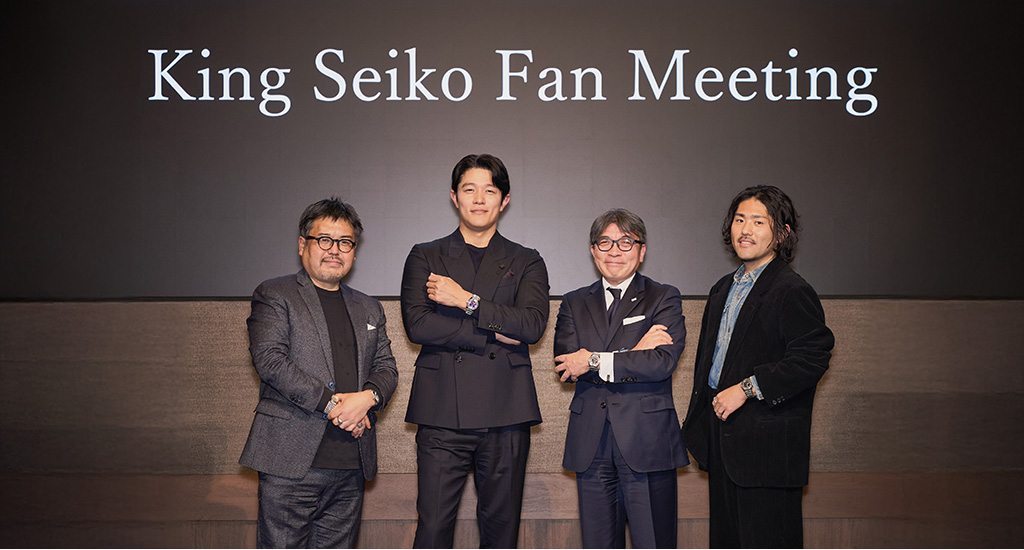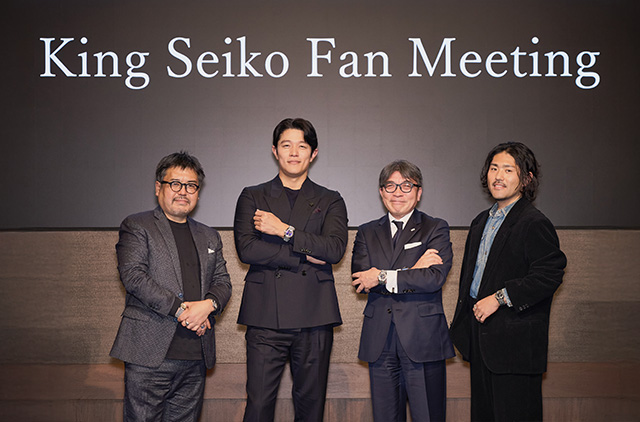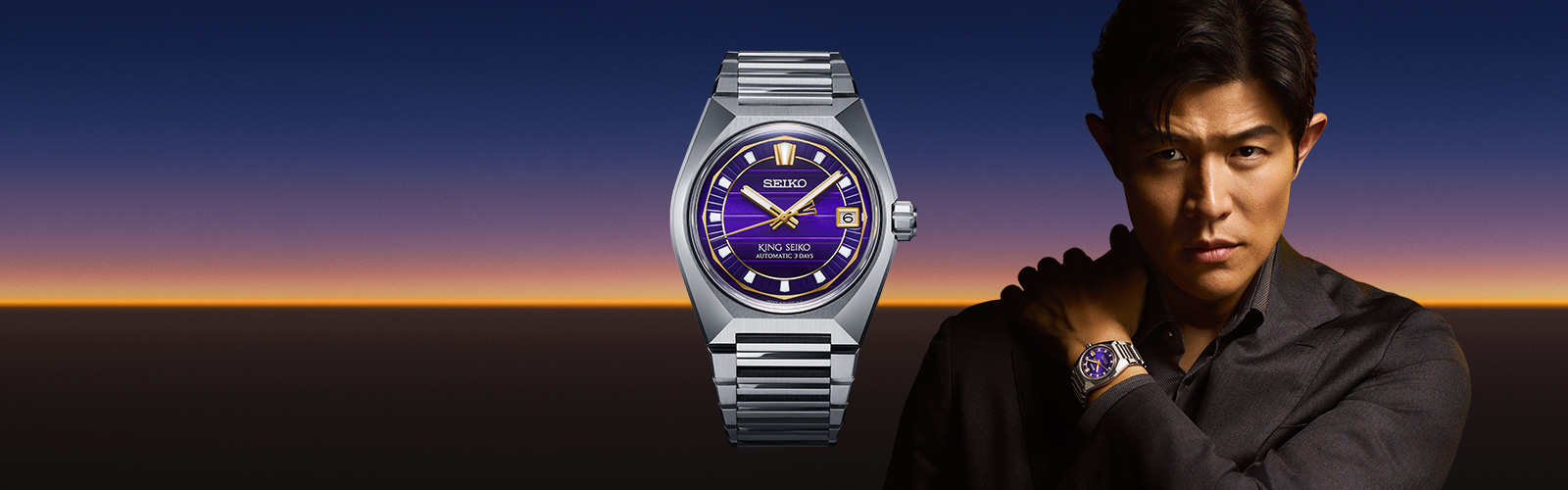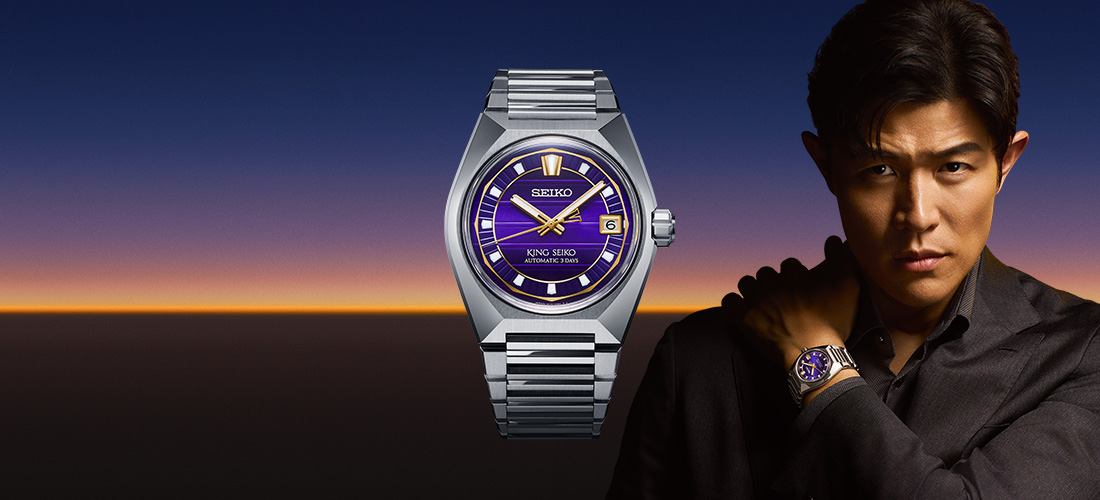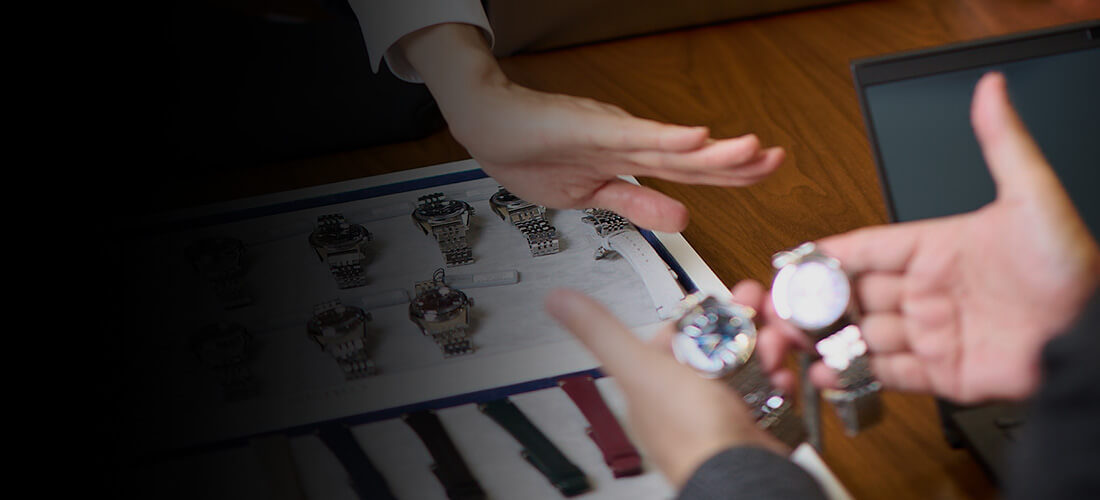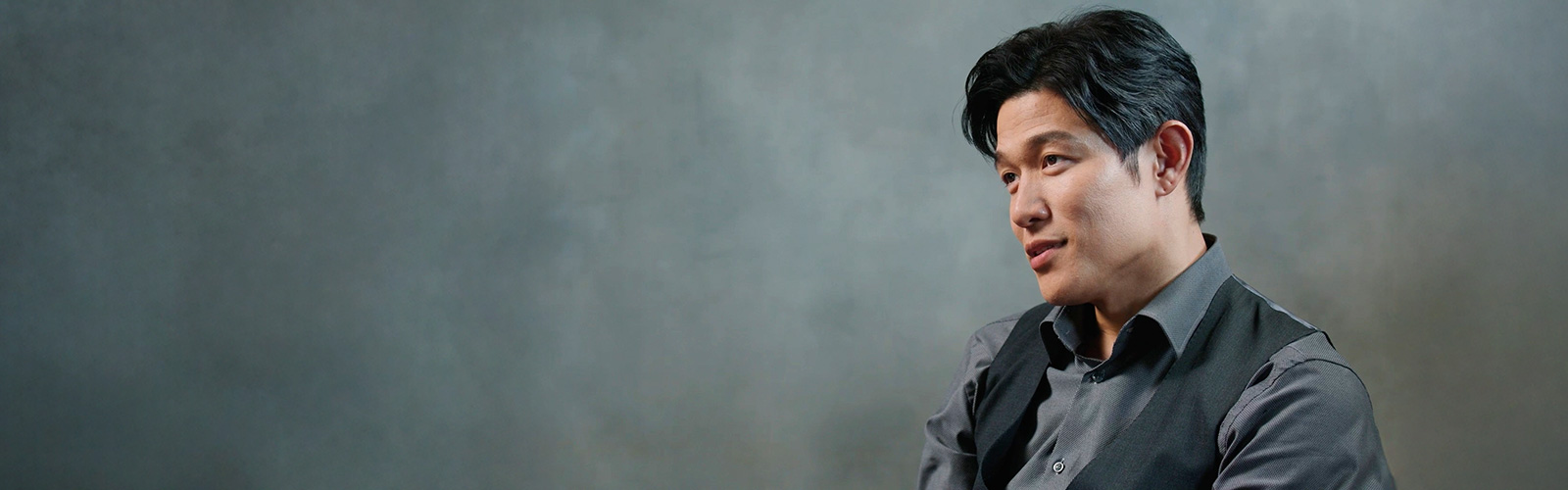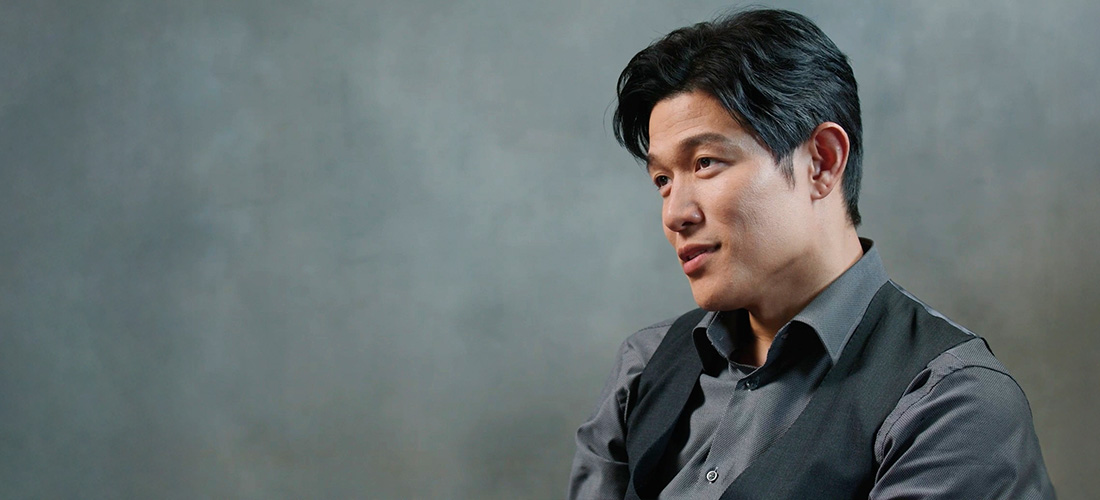
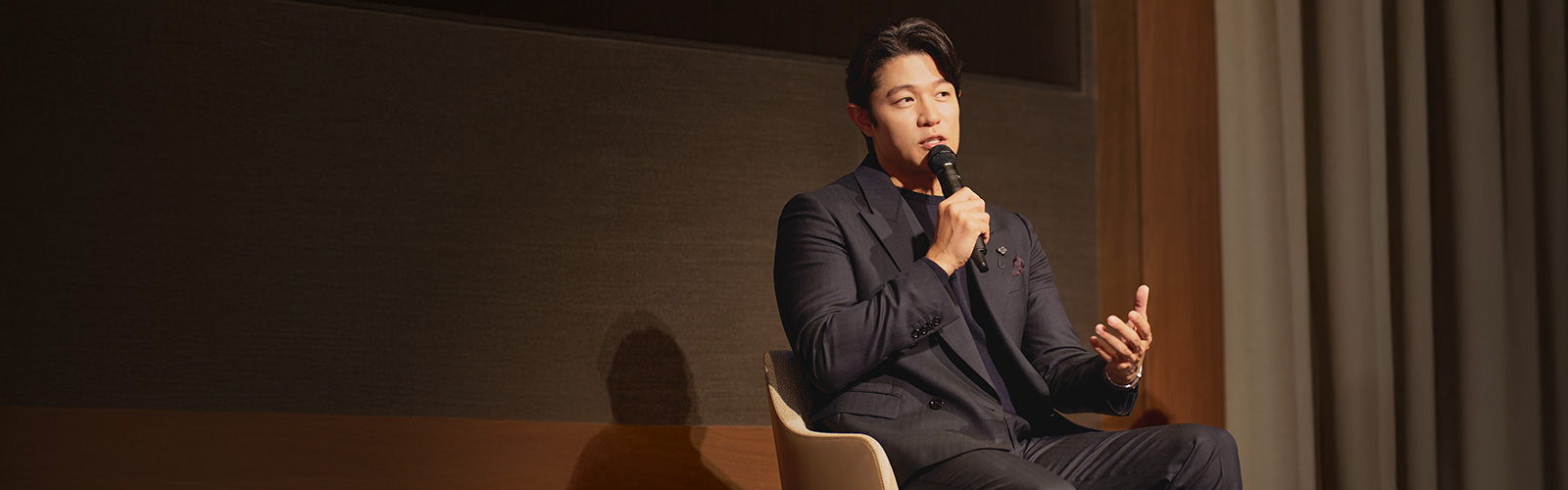
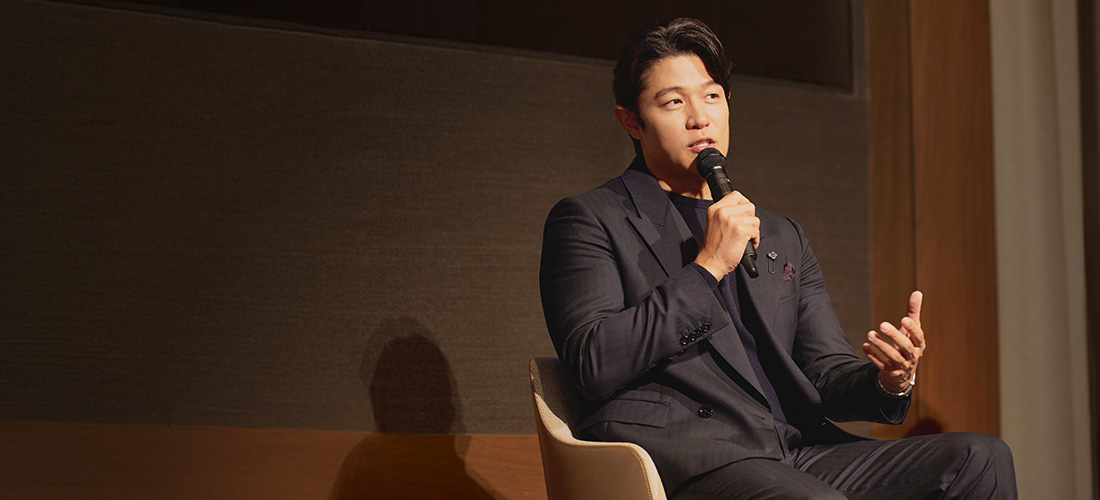
On December 6, 2025, we held the first-ever King Seiko Fan Meeting. The event featured Ryohei Suzuki, King Seiko’s Global Ambassador; Masayuki Hirota, Editor-in-Chief of Chronos Japan; and Yu Sekiguchi, Editor-in-Chief of Hodinkee Japan. Together with King Seiko designer Takuya Matsumoto, they engaged in an insightful panel discussion. On this page, we share highlights from the discussion underlining King Seiko's enduring appeal.
Matsumoto:
King Seiko was born in the 1960s and became a driving force in the evolution of domestically
produced mechanical wristwatches in Japan.
The first King Seiko was created in 1961 at our former factory, known as the Daini Seikosha,
located in Kameido, Tokyo. It was highly acclaimed for its superior quality and distinctive
design. Although King Seiko production was discontinued in the 1970s, the collection was
revived in 2022 and continues to thrive today.
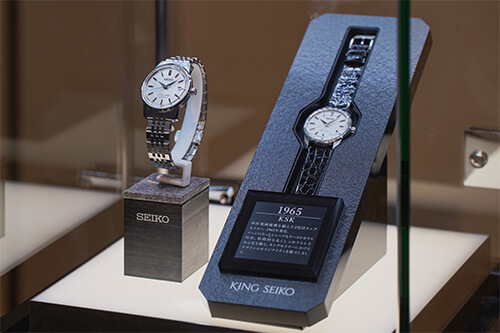
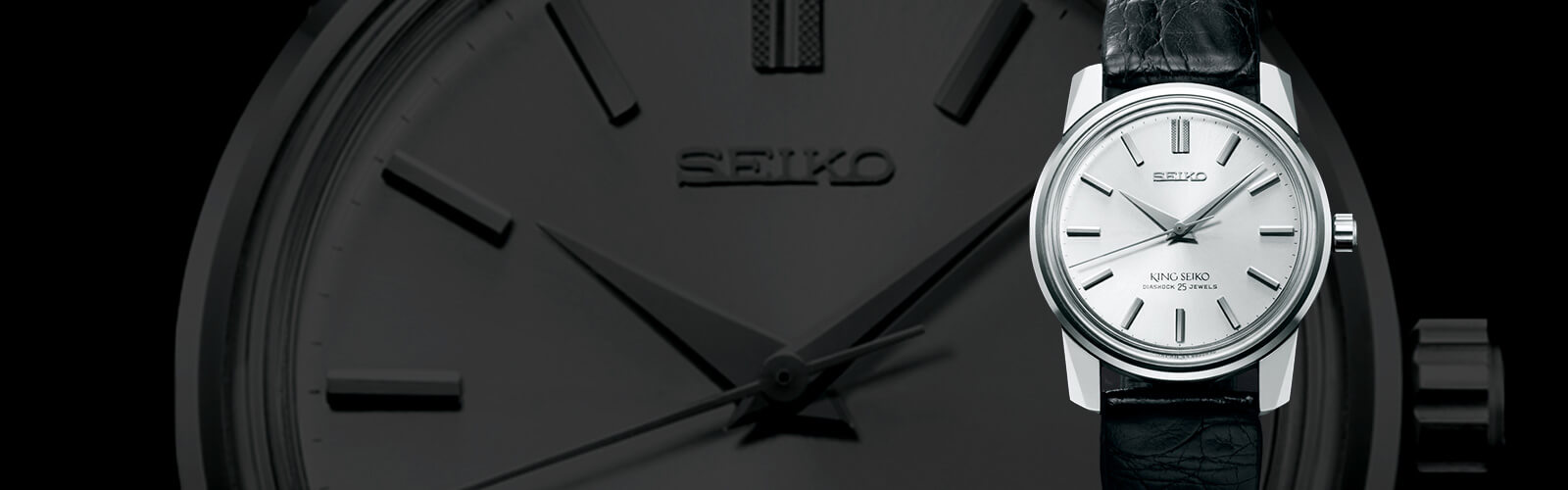
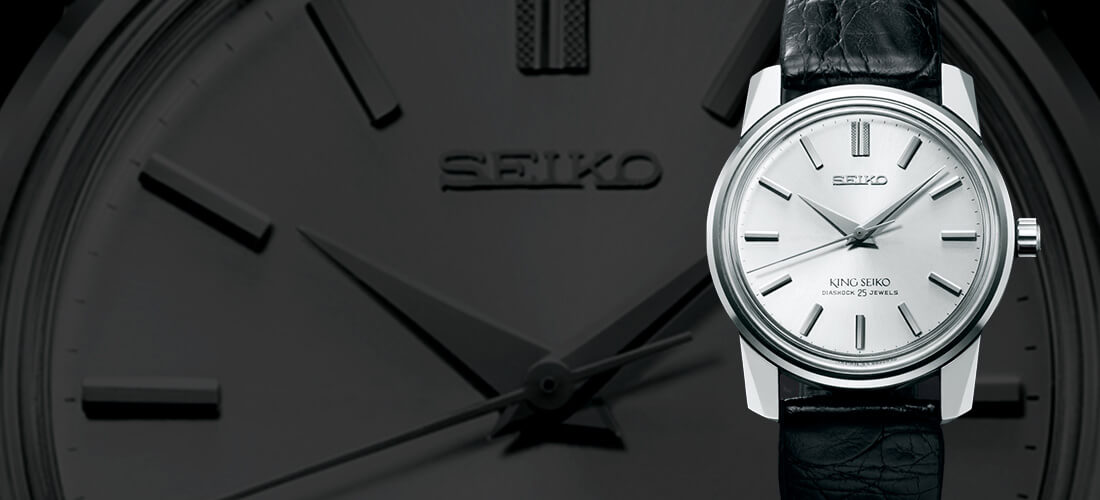
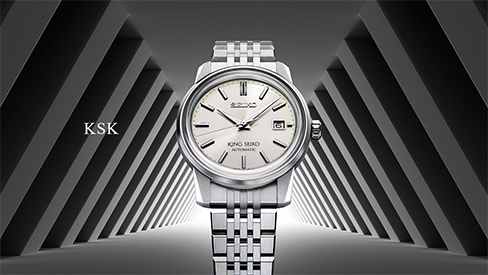
The model known as the KSK, essentially the second generation of King Seiko, best embodies
the brand’s philosophy, “The Newest Classic.” It represents the essence of what King Seiko
stands for.
With its bold, dignified proportions, this timepiece still feels remarkably fresh today,
with no sense of being dated. That timeless appeal is what makes King Seiko a distinctive
watch cherished across generations.
Hirota (Editor-in-Chief):
In the 1960s, Seiko had two major collections: King Seiko and Grand Seiko. While Grand Seiko
was characterized by a calm and refined aesthetic, King Seiko was, from the very beginning,
more free-spirited and experimental.
Although it was positioned in the high-end price range even at the time, King Seiko clearly
embodied Seiko’s willingness to explore a wide range of ideas. This pioneering spirit is
precisely what makes the collection so compelling.
For example, the KSK featured lugs whose four corners were cut at an angle - an extremely
forward-looking design choice for the 1960s.
King Seiko encapsulates the fascination of watches from the 1960s and 1970s, along with the
remarkable diversity of design from that era. At the same time, I believe that the brand’s
greatest appeal lies in the fact that its fundamentals as a watch are firmly and reliably
established.
Sekiguchi (Editor-in-Chief):
King Seiko was established in 1961, a time when Japan was entering a period of rapid
economic growth. Because King Seiko was made in Tokyo, I imagine the brand was witnessing
the increase in businesspeople firsthand, and that practicality was therefore a key value
from the beginning.
The pricing was set within a range of roughly 12,000 to 15,000 yen - equivalent to the
starting salary of a university graduate at the time - and there was a strong commitment to
creating watches within that framework.
Even today, King Seiko remains accessible in terms of price, yet the watches are almost
“over-engineered,” to the point that one might wonder if they are produced at a
loss.
Remaining true to the original philosophy while sustaining this standard within such a
price range is truly admirable, and I see it as one of King Seiko’s defining strengths.
Ryohei Suzuki:
I also feel that the boldness of the designs and the wide range of variations, as Mr.
Hirota mentioned, are key aspects of King Seiko’s appeal.
“King Seiko is not afraid of failure.” That phrase really resonates with me, and I see
it as closely connected to the spirit of the VANAC. Even if there is a risk of failure,
the brand keeps advancing, striving to deliver the highest possible quality while
remaining within an accessible price range.
That mindset strongly resonates with the work I do myself, and perhaps that is why I am
drawn to King Seiko.
Ryohei Suzuki:
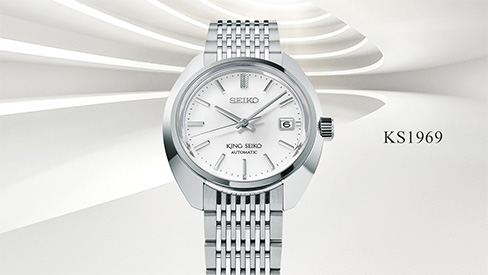
The watch I wear most often in my private life is the KS1969.
Once I tried it on, it felt really great. It’s thin and fits the wrist beautifully, and the
bracelet has a light, fluid feel that closely recreates the character of a vintage bracelet
while being updated in a modern way.
That said, I’m personally a fan of dauphine hands. I really like the shape of the hands on
the KSK, so at first I thought I would prefer dauphine hands on this model as well. But when
I actually put on the KSK and compared them, I realized, “No, this is different.”
With the KS1969 dial, these hands are absolutely the right choice. That made me feel a deep
respect for the designers.
The KSK fits in anywhere, it has my favorite hand shape, and it truly embodies the character of King Seiko, so I think many people will enjoy picking it up and wearing it.
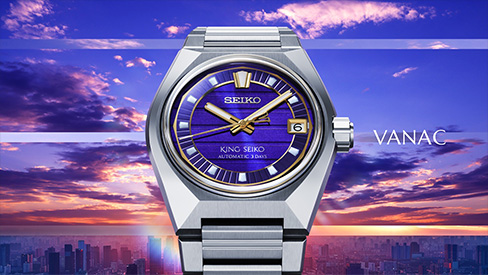
I had always thought of King Seiko as a brand known for classic designs, so seeing the
release of the VANAC came as a surprise.
However, when I looked at the original VANAC models from the 1970s, their appearance was
quite different. Even so, the new model successfully reinterprets the essence of the
original through modern materials and technology.
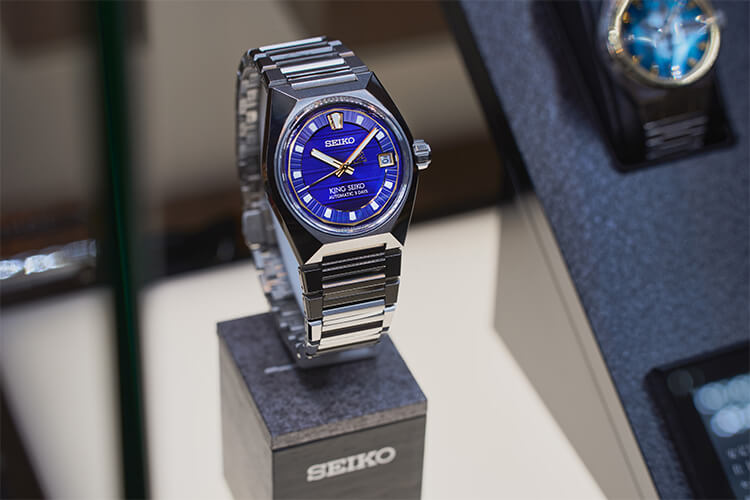
You can see the movement through the case back, the watch is water resistant, and it’s
equipped with a high-quality movement. I think the adventurous spirit behind releasing such
a bold design, done with complete seriousness, is truly impressive.
It also feels like a declaration of how King Seiko intends to present itself going forward.
Matsumoto: I only realized today that Mr. Suzuki is a real enthusiast when it comes to watch hands. In fact, designing the hands is one of the most delicate parts of creating a watch. Even a slight change in their length or balance can completely alter the overall impression. They’re really like the “face” of the watch. To your point, deciding which shape of hands best matches a particular design is something we agonize over during the design process.
Hirota (Editor-in-Chief):
The KS1969 features large, gently curved surfaces that are extremely difficult to polish
beautifully, yet Seiko excels at this– just as it did in the past, and continues to do
today.
Wide, mirror-polished surfaces are prone to distortion, but Seiko finishes them flawlessly.
Achieving such bold surfaces demands a high level of technical skill, which is precisely why
King Seiko fits so well within this price range.
King Seiko had already reached a world-class standard in design from its earliest days.
Those forms are now further refined using modern technology, resulting in an exceptionally
high level of finish. While the design is classic, it has been enhanced with greater
refinement, making it a watch that is easy to wear in everyday life – if anything, it feels
fresh and contemporary.
Even today, manufacturers around the world closely observe Seiko’s case-finishing expertise,
and there is no doubt that the KS1969 stands as one of its most iconic expressions.
Sekiguchi (Editor-in-Chief):
As Mr. Suzuki mentioned, wearing comfort – almost as if the watch is gently clinging to the
wrist – is truly the essence of the KS1969’s appeal.
The bracelet is extremely thin, and achieving this level of thinness and balance despite its
multi-row structure is genuinely astonishing.
The original 1969 model was equipped with a manual-winding movement, and thinness was one of
its defining characteristics.
In the modern version, the watch uses an automatic movement, but by installing the Caliber
6L35 – the thinnest movement in Seiko’s current lineup – the proportions of the original
model have been faithfully recreated.
Hirota (Editor-in-Chief):
To add to that, fine-link bracelets are structurally prone to looseness or rattling.
However, through technological updates, each individual link now interlocks precisely,
resulting in a stable and comfortable fit.
As a result, while the design remains classic, the construction has been thoroughly updated
to meet the standards of a high-end timepiece. That contrast is what I find particularly
appealing.
Ryohei Suzuki:
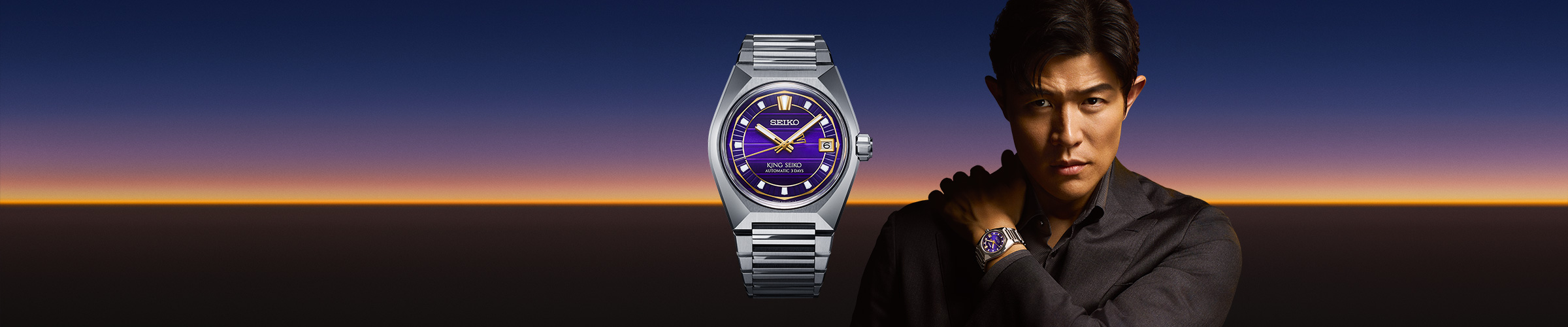
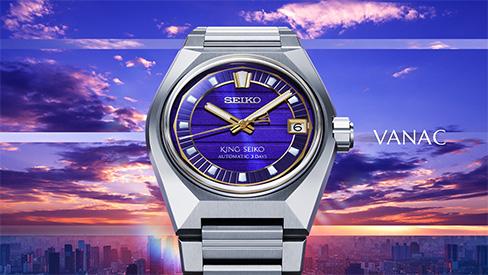
For the VANAC, I see it as the watch to wear at decisive moments – when it really matters.
When I want to express my individuality or feel like a slightly different version of myself,
I think the VANAC is the right choice.
The KS1969 is thin and, as Mr. Hirota often says, it sits beautifully on the wrist, so I’d
like to wear it when I want to relax.
The KSK can really be worn anytime, but I’d associate it more with active moments.
Ryohei Suzuki: I wore the VANAC when I traveled to Thailand, but the place that comes to mind now is Nara. Purple works beautifully with Horyu-ji Temple in Nara. When I visited the temple, I wore purple clothing, and it really lifted my mood. That’s why I’d love to visit Horyu-ji wearing this VANAC.
Hirota (Editor-in-Chief):
Reproducing the color purple is extremely difficult, which is why I feel it’s a color that
truly reflects the strengths of a Japanese brand.
A purple dial is actually quite rare, isn’t it? Mr. Sekiguchi, do you know any brands that
use purple?
Sekiguchi (Editor-in-Chief):No, you hardly ever see purple dials.
Hirota (Editor-in-Chief):
A watch that truly stands out while traveling is, in fact, very difficult to achieve. During
travel - on trains or while moving from place to place - accurate timekeeping is essential,
yet at the same time, you want to feel relaxed. That is why choosing a travel watch is
surprisingly challenging.
A travel watch must first and foremost be a proper, reliable timepiece, while also serving
as a bridge between the everyday and the extraordinary. I believe that balance is what truly
matters. It may be close to what Mr. Suzuki described as a sense of “playfulness.”
Seen from that perspective, King Seiko actually pairs extremely well with travel.
Ryohei Suzuki:
And I also think the fact that it’s made in Japan is important. When you travel abroad from
Japan, how it makes you feel really matters. It gives you a sense of wanting to carry
yourself in a way that you can be proud of as a Japanese person.
Sekiguchi (Editor-in-Chief):
Because of my work, I often select several watches and take them overseas, wearing them
while I work. When interacting with people abroad, wearing a Japanese watch becomes a way of
representing who you are.
Ryohei Suzuki:
I believe a watch is something that spends time with you and shares your memories. I hope
you’ll choose a King Seiko model you truly love, wear it in your everyday life as well as on
your travels, and enjoy many wonderful moments together.